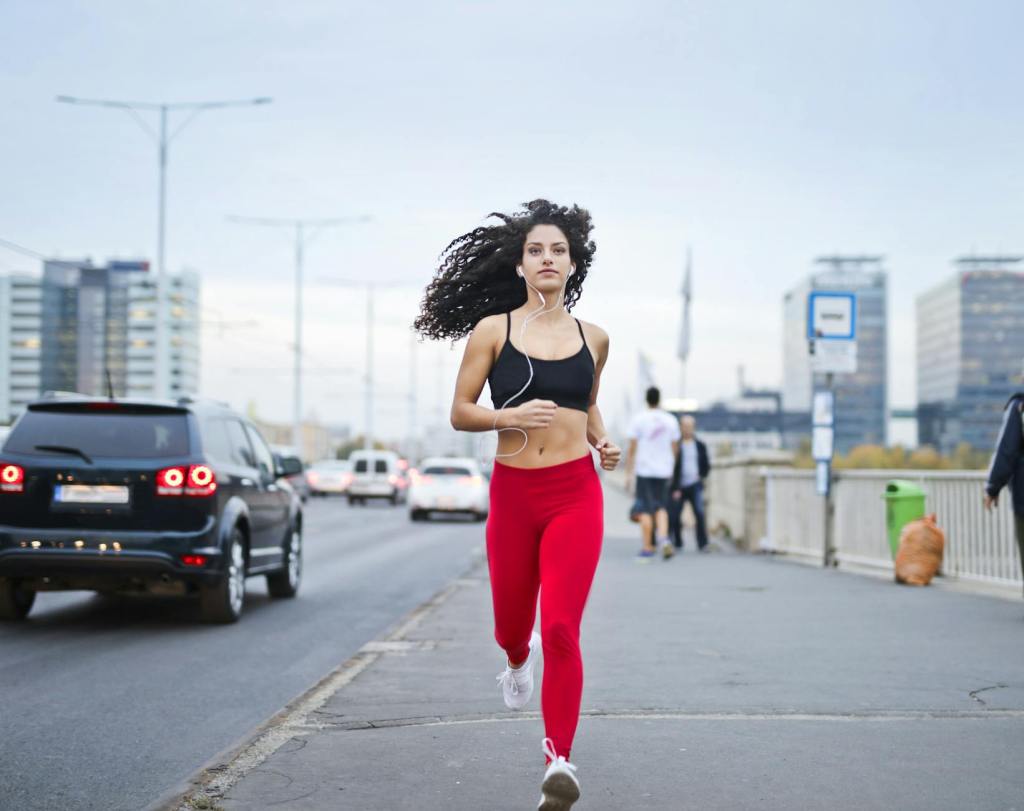
What is cadence in running? Learn why step count matters, how to improve it, and why elite runners aim for 180 SPM.
Ever wonder why elite runners seem to glide effortlessly? One key factor is cadence—the number of steps you take per minute. Understanding and optimizing your cadence can make you a stronger, more efficient runner.

- What is Cadence in Running
- Why Running Cadence Matters for Performance and Injury Prevention
- What Is the Best Running Cadence?
- How Do I Improve My Running Cadence?
- FAQ
What is Cadence in Running
Running cadence is the rate of how many steps per minute you take when running measured by SPM (steps per minute).
The ideal rate is 180 SPM. This was first measured by running coach Jack Daniels in a 1984 Olympics study where he counted and measured how many steps each olympic runner took during their events and found that they all averaged 180 steps per minute (SPM).
A common mistake that amateur runners make is they take too few strides (steps), resulting in a low cadence. Under 160 is far too low, aim for 175-180.
Cadence and stride are inter connected, your stride is how far out your foot reaches before touching the ground and cadence is how many steps you take. You can increase your cadence by shortening how far your foot reaches. Or you can decrease your cadence by lengthening your stride.
Be wary, if you lengthen your stride too far out then you can overstride which can be cause for injury.
Most modern running watches track your running cadence using gps and gyros in the watch. When you go out for a run and record it with a Garmin, Coros, or Apple Watch you can check what your cadence was throughout the run.
A good way of testing and checking your cadence is to take a sample run and run at your normal rate for 10 minutes, and then adjust your cadence to try and take more steps to see how it feels for another 10 minutes. Then you can go back and see how the numbers specifically changed.
Why Running Cadence Matters for Performance and Injury Prevention
The reason cadence is important is because it helps reduce the load on your body. The more steps that you take the less weight that each leg absorbs each step that you take.
Think of it this way, If you run at 160 SPM for a 4-hour marathon, you’ll take about 38,400 steps. But if you increase to 180 SPM, you’ll take 43,200 steps. That’s 4,800 more steps — spreading the impact across your body and reducing the force on each leg per step.
Now you might be thinking, isn’t fewer steps better? Except that if you weigh 170 lbs that weight is distributed over time into more steps so the load over the course of an hour is more even.
What Is the Best Running Cadence?
The optimal cadence can range from individual to individual, however as close to 180 steps per minute that you can get the better.
What if my cadence is higher? If you have a high cadence, in the 190 range that is perfectly fine! There is no issue with a high cadence so long as it feels comfortable to you.
How Do I Improve My Running Cadence?
Here we have some suggested running drills to help you improve your running cadence. This can be done as a warmup, during your cooldown at the end of a run, or as a separate session.
Strides
Strides are a series of short bursts of running at a fast pace, 30 seconds or so. Your body naturally knows how to run, your body has adapted over time to run with proper form. What often messes with our form is running slow.
Near the end of any run, run 4-6 x 30 second strides. As you are 1 or 2 kms from the finish of your run, pick a spot such as a lamppost or bench and run hard to it. Not a full out sprint but a fast run. Then slow to recover for a minute or so. Rinse and repeat.
The reason it’s important to do this at the end of your run is that then your body can internalize proper form once you’re done your run in preparation for your next run!
Skipping
Warming up with skipping dramatically helps with your cadence. Skipping helps open up your hips, warm your body and joints up, and reinforce good posture with high knees and a straight back.
Most adults don’t skip anymore for no good reason! Spend 5-10 minutes skipping at the start of your next run and it will dramatically help increase your running cadence and running form.
When you skip you are driving your knee up while pushing hard off of the ground, an exaggerated version of running. As with most running drills they are often an exaggerated and powerful single version of one element of running.

Plyometrics
“Plyos” are explosive movements that help improve power and technique thus improving your cadence.
Here are 8 Pylometrics to practice at home:
Reverse Lunge with Knee Up
Jump Squat
Front and Back Long Jump
Jumping Jacks
Box Jump
Tuck Jump
Single Leg Pogo Hops
Jump Rope Skipping

FAQ
Is cadence something I should analyze?
Yes! During training knowing where you are at is a beneficial thing. If you find yourself at an optimal 175-185 range then forget about it and focus more on other areas of training
What does my cadence say about me as a runner?
A high cadence suggests either more experience or shorter legs! A lower cadence suggests you have less experience and stride out too far or having long legs which can make it difficult to take smaller steps
How can I check my cadence while running?
If you have a Garmin or Coros watch you can set custom data fields on your watch to include a measurement of real time cadence!
Does running cadence change with speed?
Yes! The faster you run the higher your cadence will trend. If an easy pace for you is 8 min/mile, and your cadence is 160 spm at this speed. Running at 6:45 min/mile could result in a cadence closer to 175
 Breaking 3
Leave a comment